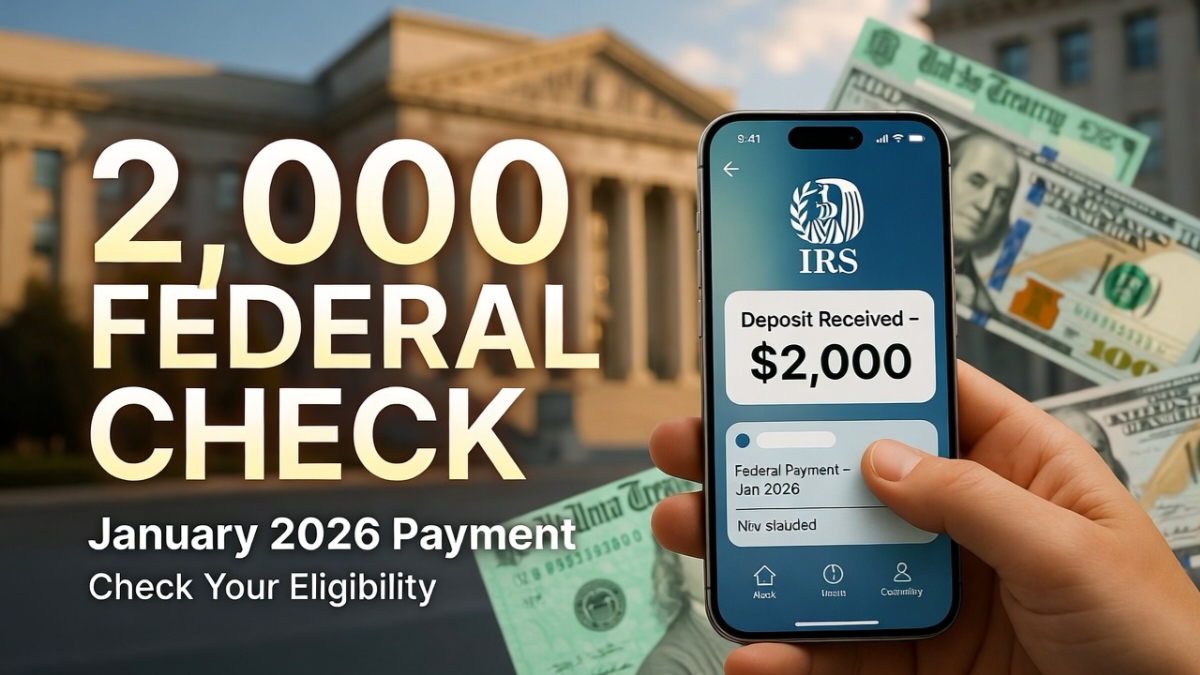
$2,000 Federal Deposit Checks: As January 2026 moves forward, talk of $2,000 federal deposit checks has spread quickly across the United States. Many Americans are checking their bank accounts daily, hoping to see a new deposit appear. Social media posts and political statements have created the impression that payments are already approved and only delayed by processing. For households facing high living costs, the idea of sudden relief feels both hopeful and urgent.
Despite the excitement, the situation is far from settled. No federal deposits have been released so far, and the proposal remains tied to political, legal, and budget decisions. Understanding where this plan came from, why it is delayed, and what could realistically happen next is important for anyone expecting this payment.
The Idea Behind the $2,000 Federal Deposit
The proposal for $2,000 federal deposit checks was promoted by former President Donald Trump as part of a broader economic plan. He linked the payments to revenue collected from tariffs placed on imports, especially from countries such as China and Mexico. According to the proposal, these tariffs would generate enough money to fund direct payments to eligible Americans.
Supporters describe the plan as a way to return trade revenue to citizens while rewarding domestic economic strength. The message was simple and appealing: tariffs bring in money, and Americans receive a share of it. However, turning that idea into actual payments requires much more than public announcements.
Why the Payments Have Not Arrived Yet
As of mid-January 2026, no $2,000 federal deposits have been issued. One major reason is funding. Estimates suggest that tariffs may generate hundreds of billions of dollars, but paying $2,000 to every eligible adult would cost significantly more. This gap between projected revenue and promised payouts has raised concerns among economists and lawmakers.
Another major obstacle is congressional approval. Even if tariff revenue exists, Congress must authorize how that money is used. Without a passed bill and signed legislation, the Treasury and IRS cannot legally issue payments. Until these steps occur, deposits cannot move forward.
यह भी पढ़े:
 $2,000 Direct Deposit in January 2026: Who Qualifies, Payment Timing, and What’s Official
Legal Challenges Slowing the Process
Legal issues are also playing a role in delaying any potential payments. Several importers have challenged the tariffs in court, arguing that they were imposed using emergency powers that may not apply. If courts rule against these tariffs, a portion of the expected revenue could disappear.
These legal challenges add uncertainty to the plan. Even if payments are approved in principle, court rulings could reduce available funds or block their use entirely. This makes it difficult for agencies to set timelines or guarantee amounts.
Political Divisions Around the Proposal
Political disagreement is another factor slowing progress. Some lawmakers support the idea of direct payments, especially to middle- and lower-income households. Others worry about increasing the federal deficit or relying too heavily on unstable tariff revenue.

Previous attempts to pass similar rebate or stimulus bills have failed due to lack of bipartisan support. Without broad agreement, the $2,000 deposit plan faces an uphill battle. Political negotiations often take months, not weeks, which explains why no deposits have appeared yet.
Comparisons to Past Stimulus Payments
Many Americans compare this proposal to pandemic-era stimulus checks. During 2020 and 2021, payments arrived quickly and automatically through the IRS. Those experiences set expectations that future payments could work the same way.
However, the situations are very different. Pandemic stimulus checks were funded through emergency legislation and federal borrowing. Tariff-funded payments depend on variable trade revenue and ongoing legal approval. This makes the current proposal much less predictable than past stimulus programs.

Why Some People May Still See New Deposits
Adding to the confusion, January is also the start of tax refund season. Many Americans receive refunds in the $1,500 to $3,000 range, especially if they qualify for refundable credits. These refunds often appear as “US Treasury” deposits in bank statements.
Social Security cost-of-living increases and delayed benefit adjustments may also appear in January. When people see these deposits, they may assume they are part of the new $2,000 plan, even when they are not. This overlap fuels rumors and misunderstandings.
Economic Impact and Public Expectations
If $2,000 payments were released, they could have a noticeable impact on consumer spending. Many households would use the money for rent, utilities, groceries, or debt repayment. Supporters argue this would boost the economy in the short term.
At the same time, some economists warn that sudden cash injections could increase inflation, especially in essential goods. Public opinion remains mixed. Some Americans are optimistic, while others are skeptical after weeks of waiting with no official confirmation.
What Americans Should Do Right Now
For now, financial experts advise caution. Families should not rely on the $2,000 deposit to cover essential expenses. Until official approval is announced, the payment should be viewed as a possibility, not a certainty.
It is wise to keep IRS records updated, including bank information, and to file 2025 tax returns electronically once filing opens. People should also be alert to scams. Any message asking for payment or personal details to “release” a federal deposit is fraudulent.
What Happens Next
The future of the $2,000 federal deposit depends on several unresolved factors. Congress must approve funding, courts must resolve legal challenges, and federal agencies must establish clear rules. Until these steps occur, no payment date can be guaranteed.
If the plan does move forward, it may involve limited eligibility, smaller amounts, or delayed timing. Clear communication from official sources will be the first sign that payments are truly on the way.
The idea of $2,000 federal deposit checks for January 2026 has captured national attention, but reality has not yet matched expectations. While the proposal remains alive in political discussion, it has not reached the stage of actual distribution.
For now, patience and verification are essential. Trusting official government announcements over social media claims is the best way to avoid disappointment and financial risk.
Disclaimer
This article is for informational purposes only and does not provide tax, financial, or legal advice. Any federal deposit payments depend on congressional approval, legal outcomes, IRS verification, and Treasury policy decisions. Government programs and timelines may change. Readers should consult official U.S. government sources or qualified professionals for guidance specific to their situation.